It’s never wise to rely on conventional wisdom — assuming something is true because everyone else assumes it to be true. That’s no wisdom at all.
Did you ever play the telephone game when you were a kid?
That’s where the kids all line up from left to right. And the kid on the far left whispers something in the ear of the kid to their right… who whispers it in the ear of the kid on their right… and on it goes down the line.
And the phrase the last kid in the line blurts out has almost no resemblance whatsoever to the initial phrase. The kids all laugh. And it’s good fun.
Trouble is, most of them love the telephone game so much they keep playing it for the rest of their lives. And some of them grow up to be marketers.
But the telephone game isn’t nearly as much fun when it comes to marketing. It results in grand marketing plans that involve massive expenditures based on one assumption piled on top of another.
And then you wonder why your marketing falls flat and your dreams of world domination never get off the ground.
Speaking of getting off the ground, allow me to relate a little story to help illustrate my point …
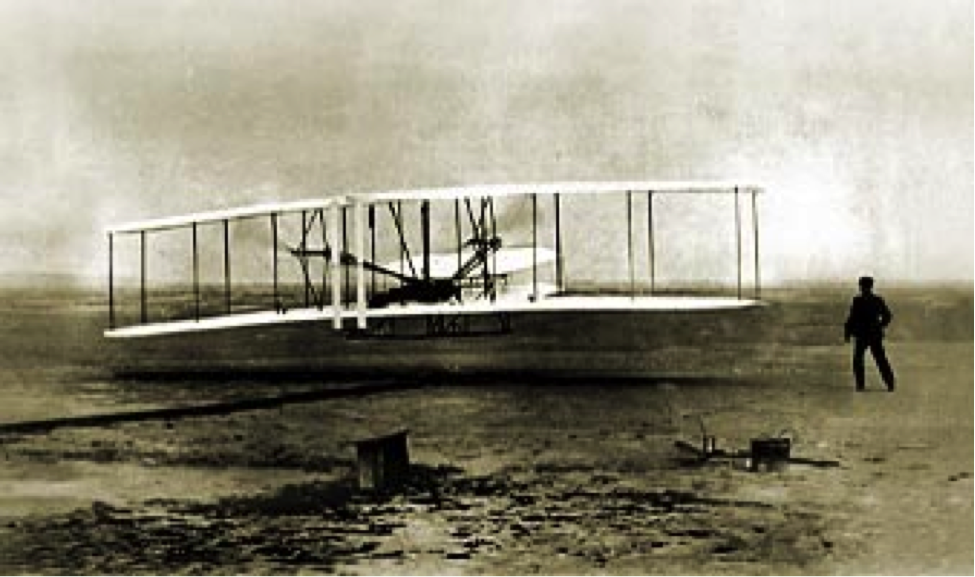
I’m betting you know the story of Orville and Wilbur Wright. They went down in history as the first human beans to fly. But how many people remember Dr. Samuel Pierpont Langley?
In 1896 the Wright Brothers and Langley were engaged in a fierce competition. Who would be first to conquer the skies?
Langley — a distinguished scholar and secretary of the Smithsonian institute — was the clear favorite. He had already achieved impressive unmanned flight over the Potomac with his steam powered Aerodrome No. 6.
Based on this success, Langley was able to raise $100,000 in funding, and set out to develop an extraordinary radial-cylinder internal combustion engine that would produce an astonishing 52 horsepower — in his assumption, capable of powering an aerodrome large enough for manned flight.
The Wright Brothers, by contrast, were convinced that the secret to success lay in their ability to control the aircraft once in flight. They therefore spent their time experimenting with gliders over the forgiving sands of Kitty Hawk.
For several seasons they worked on manipulating the wings, nose, and tail of the aircraft, so as to allow the operator to actively control it.
Wilbur, who most often piloted, suffered a multitude of minor cuts and bruises. But on each successive trial, much was learnt. Assumptions were challenged. And little by little, progress was made.
But on October 7, 1903, it looked like the Wright’s had lost, as Langley made ready his first manned launch. Langley’s plane would go from a dead stop to a 60 mph flying speed in only 70 feet.
But the stress of the catapult launch proved greater than the flimsy wood-and-fabric airplane could stand, and the front wing was badly damaged on takeoff. The nose heavy Aerodrome ‘A’ then plunged into the Potomac.
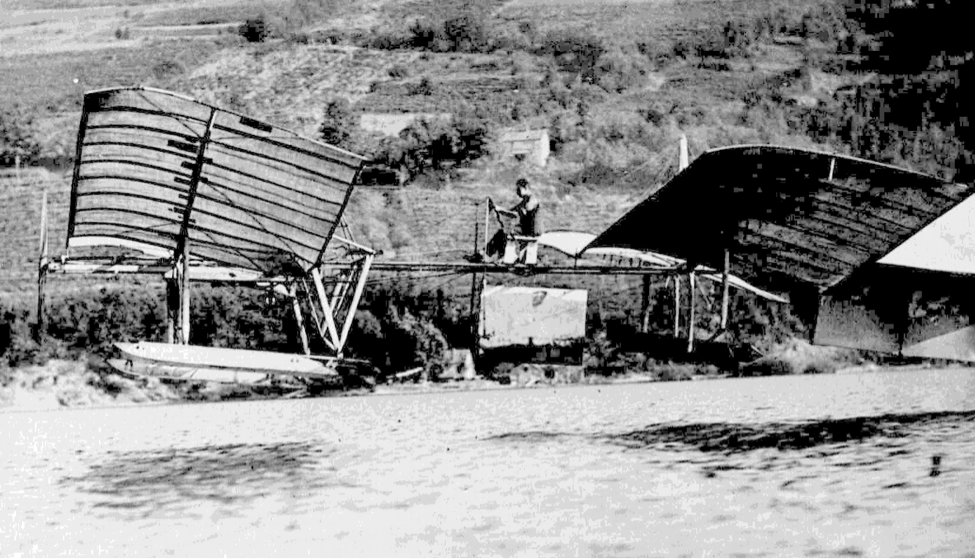
A reporter who witnessed the event claimed “it flew like a handful of mortar”.
Things went even worse during the second launch of December 9, 1903, where the rear wing and tail completely collapsed during launch.
Langley had assumed his way through almost all of his $100,000 in capital.
And just 8 days after Langley’s spectacular failure, a sturdy, well designed craft, built for about $1,000 and powered by a tiny 8 horsepower engine, struggled into the air at Kitty Hawk, defining for all time the moment when humankind mastered the skies.
Langley died in 1906 after a series of strokes, a broken and disappointed man.
What on earth does flying wooden airplanes have to do with marketing my business?
The moral of the story is this:
Don’t assume. Test, test, and retest your prime value proposition to be sure it converts customers profitably, BEFORE committing yourself to major capital outlays.
Will people really want to buy your product? Will your site convert? Can you reach your customer affordably?
Be like the Wright brothers. Meticulously test your assumptions, one at a time, to see if they’ll fly, before charging headlong into your project. And put alternative plans in place should your assumptions prove false. Then when your assumptions fall flat you won’t fall flat with them.

Here’s a practical example of what I’m talking about …
Suppose you want to create a new info-product. You figure there’s a demand for your product. You assume you can reach your market easily. You imagine that people will see the value you bring them, far and above the money you’ll ask them to spend.
So you dive into it like a bull in a China shop, banging out hundreds of pages of content, and God knows what else. That’s the Samuel Pierpont Langley way.
Want to know the Wright Brothers way? Sell the product first.
Create a marketing campaign for your proposed product around a webinar. Take your product outline, and build a 1-hour overview of the information that will be contained in your product, including some really meaty bits that will impress the daylights out of attendees, actually teaching them some important points for solving the problem they’re trying to solve.
And at the end of the session, enroll people into a series of additional webinars that deliver the step-by-step training they need.
If few people sign up for the paid training, you can simply refund their money, and it’s back to the drawing board. No harm, no foul. At least you haven’t burned months creating a product.
If you get a solid response, deliver the training, record it, and your product is in the can and ready to sell again and again.
Make sense? How can you lose? Profitable campaigns — guaranteed!

The old marketing adage was, ‘build a better mousetrap and the world will beat a path to your door’. Today’s marketing meme is ‘give the people what they want, when they want it’.
Neil: That ‘build a better mousetrap…’ line, usually attributed to Ralph Waldo Emerson, is a mis-quote – and he was no marketer. There are hundreds of patents for improvements on the mousetrap, most of which have never found a single customer.
To riff on other, more accurate adages, nothing happens until something gets sold – and nothing gets sold until the customer knows that they’re there. Or somethin’ like that.
Pure Value Wisdom Thank You
great article something I look forward to apply these skills at my website https://www.winstondennis1.com/ thanks
Great insights. A couple of questions: Say you are in professional services, where you are not selling a product online but trying to drive people to schedule a consultation – what would a good benchmark be for conversion? 10% of webinar attendees? 20%? Is there a general rule of thumb or does it just depend on your business? Also, when testing today, do you usually test on a specific platform or try to drive traffic from multiple platforms? (i.e. are you driving traffic from just Facebook, or FB and LinkedIn, etc etc)
Thanks, great article!